Affordable Dog Training: Pro Results Without Breaking the Bank
Hiring a professional dog trainer can cost $50-$150 per session — or thousands for a full program. But here's the truth: you don't need to spend a fortune to train your dog well. With the right approach and resources, you can get professional-level results on a real-world budget. Here are seven strategies that work.
1. Start with Free Online Resources
There's an incredible amount of high-quality, free dog training content available. The key is knowing where to look and what to trust.
- Look for certified trainers who share content on YouTube
- Follow positive reinforcement trainers on Instagram and TikTok
- Read articles from veterinary behaviorists and certified trainers
- Join free online communities where experienced owners share advice
Pro tip: Stick to trainers who use positive reinforcement methods. If someone's advice involves punishment, fear, or dominance theory, keep scrolling.
2. Use a Training App
Training apps give you structure without the price tag of private sessions. A good app provides step-by-step plans, progress tracking, and reminders to keep you consistent.
What to look for in a training app:
- Structured training plans (not just random tips)
- Progress tracking so you can see improvement
- Reminders to help you stay consistent
- Science-based, positive reinforcement methods
3. Attend Group Classes
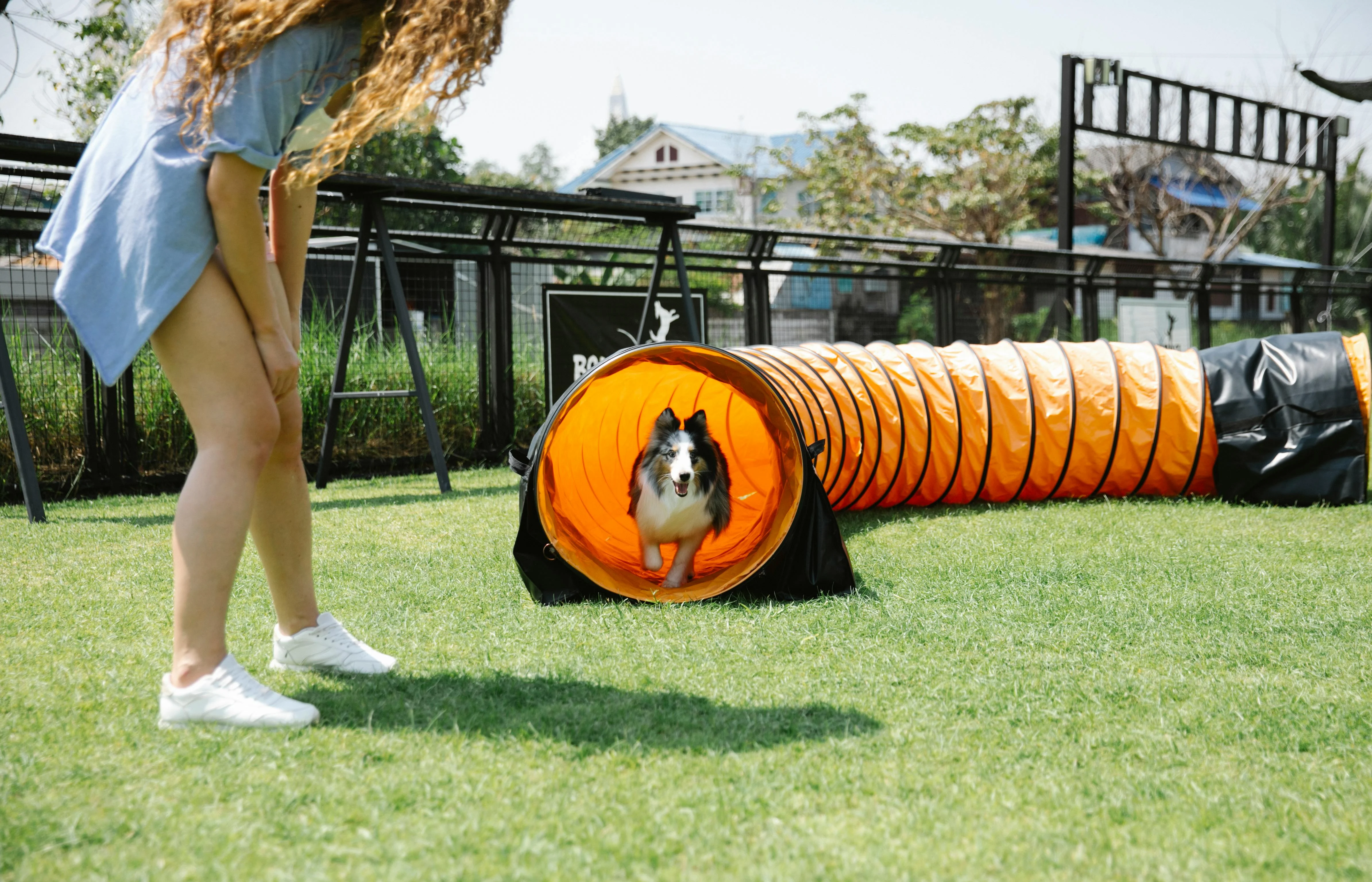
Group classes are significantly cheaper than private sessions — often $100-$200 for a multi-week course. You get professional guidance plus the bonus of socialization for your dog.
- Check local community centers and parks departments for low-cost options
- Pet stores often offer affordable group classes
- Some shelters and rescues offer free or discounted training for adopters
- Look for "puppy social" events — often free or very low cost
4. Invest in the Right Equipment (Not the Expensive Stuff)
You don't need fancy gear to train your dog. Here's what actually matters:
- Good treats: Small, soft, high-value — buy in bulk to save money
- A flat collar and 6-foot leash: Skip the retractable leashes and gadgets
- A treat pouch: Makes training sessions smoother (under $15)
- A long line (15-30 ft): Essential for recall practice in open spaces
That's it. Everything else is optional. Don't let marketing convince you that you need expensive tools to train your dog.
5. Trade Skills with Other Dog Owners
Know someone whose dog is great at recall while yours excels at loose leash walking? Train together. You'll learn from each other, your dogs get socialization, and it costs nothing.
- Set up regular training meetups at the park
- Share resources and tips you've found helpful
- Practice together — some exercises work better with multiple dogs
- Hold each other accountable for consistency
6. Use Your Library
Some of the best dog training books are available for free at your local library. Look for titles by well-known positive reinforcement trainers. A single good training book can give you a complete program to follow.
- Ask your librarian to recommend popular dog training books
- Check for ebooks and audiobooks through library apps
- Many libraries also host pet-related events and workshops
7. Know When to Invest
Budget training is great for most situations, but some issues benefit from professional help:
- Aggression: If your dog shows signs of aggression, consult a professional
- Severe anxiety: Some anxiety issues need a veterinary behaviorist
- Stuck on a specific problem: One or two targeted sessions with a trainer can be more cost-effective than months of guessing
Even one consultation can give you a roadmap to follow on your own. Think of it as an investment in direction, not an ongoing expense.
The Bottom Line
Effective dog training doesn't require a big budget — it requires consistency, patience, and the right resources. By leveraging free content, affordable tools, community connections, and smart investments, you can train your dog effectively without breaking the bank.
Start with what you have, be consistent, and remember: the most important ingredient in dog training isn't money — it's showing up every day. Your dog doesn't care about your budget. They care that you're there, treats in hand, ready to learn together.
Enjoyed this article?
Subscribe to get more training insights and updates delivered to your inbox.